WhaleStreet
Role
Product Designer · UI/UX
YEAR
2022
Focus
Crypto Trading Dashboard · UI/UX
YEAR
2022
Client
Concept
YEAR
2022
Year
2023
YEAR
2022
Making crypto trading feel less like a cockpit and more like a decision
WhaleStreet is a self-initiated concept tackling one of the most consistently poor categories of digital product design: crypto trading dashboards. The space is full of interfaces that treat visual complexity as a proxy for sophistication. In practice, that approach fails most users most of the time.
CHALLENGE — Complexity used as decoration, not communication
The dominant visual language in crypto — dense candlestick charts, overlapping data streams, aggressive color, tiny type — creates an experience that feels high-stakes even when nothing critical is happening. For new investors, it's alienating. For experienced traders, it means spending cognitive energy parsing the interface rather than thinking about the trade.
There's also a trust problem. Crypto markets are volatile and opaque — users need a clear, honest picture of their position. A cluttered interface, even unintentionally, reads as something to be suspicious of.
PROCESS — Starting with what traders actually need to know
Rather than auditing existing dashboards and improving them incrementally, I mapped the decision sequence a trader follows — what they check first, what context they need to act, and where current interfaces interrupt that flow. That sequence, not data availability, became the organizing logic for the layout.
DESIGN DECISIONS — Signal over noise, trust through clarity
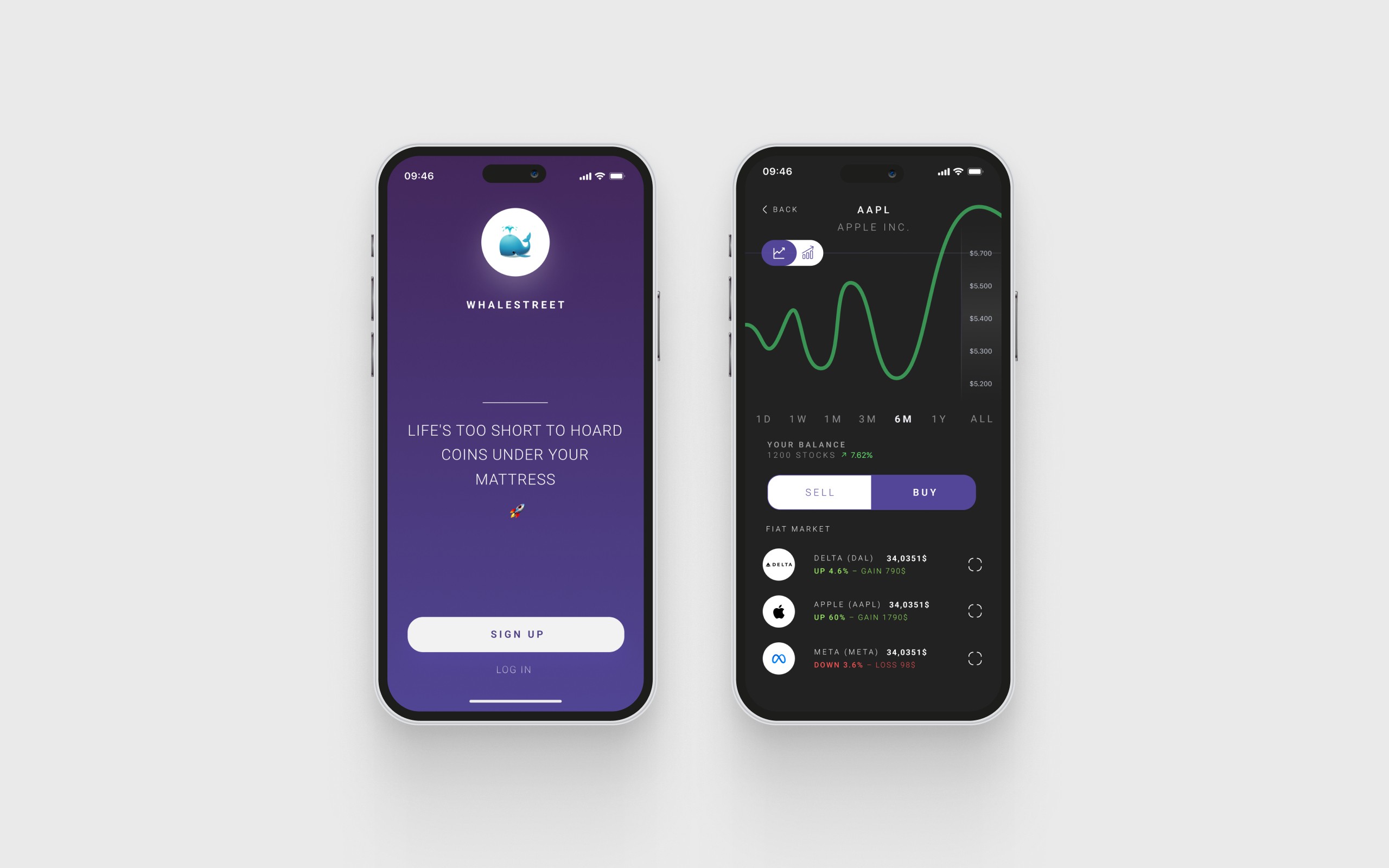
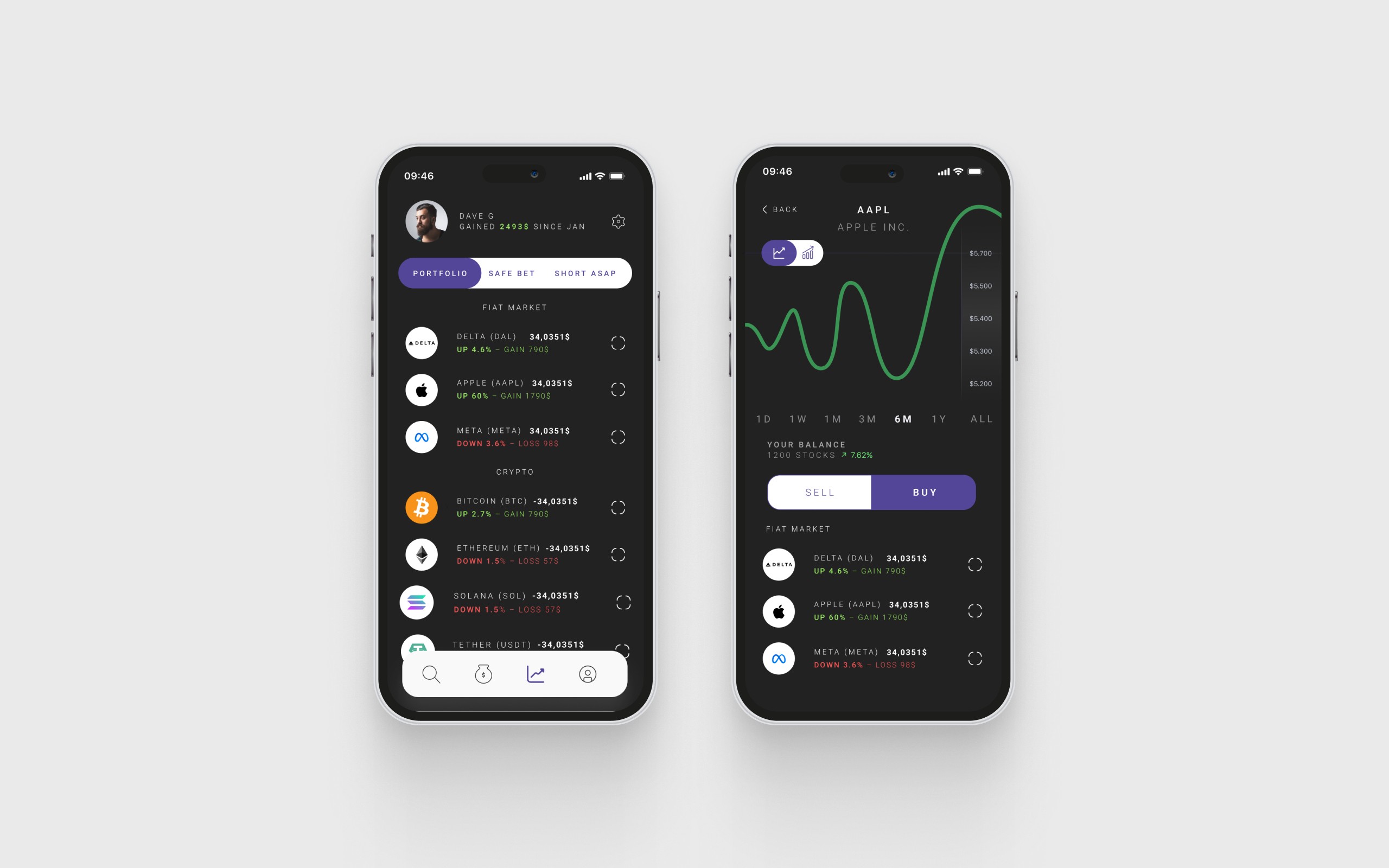
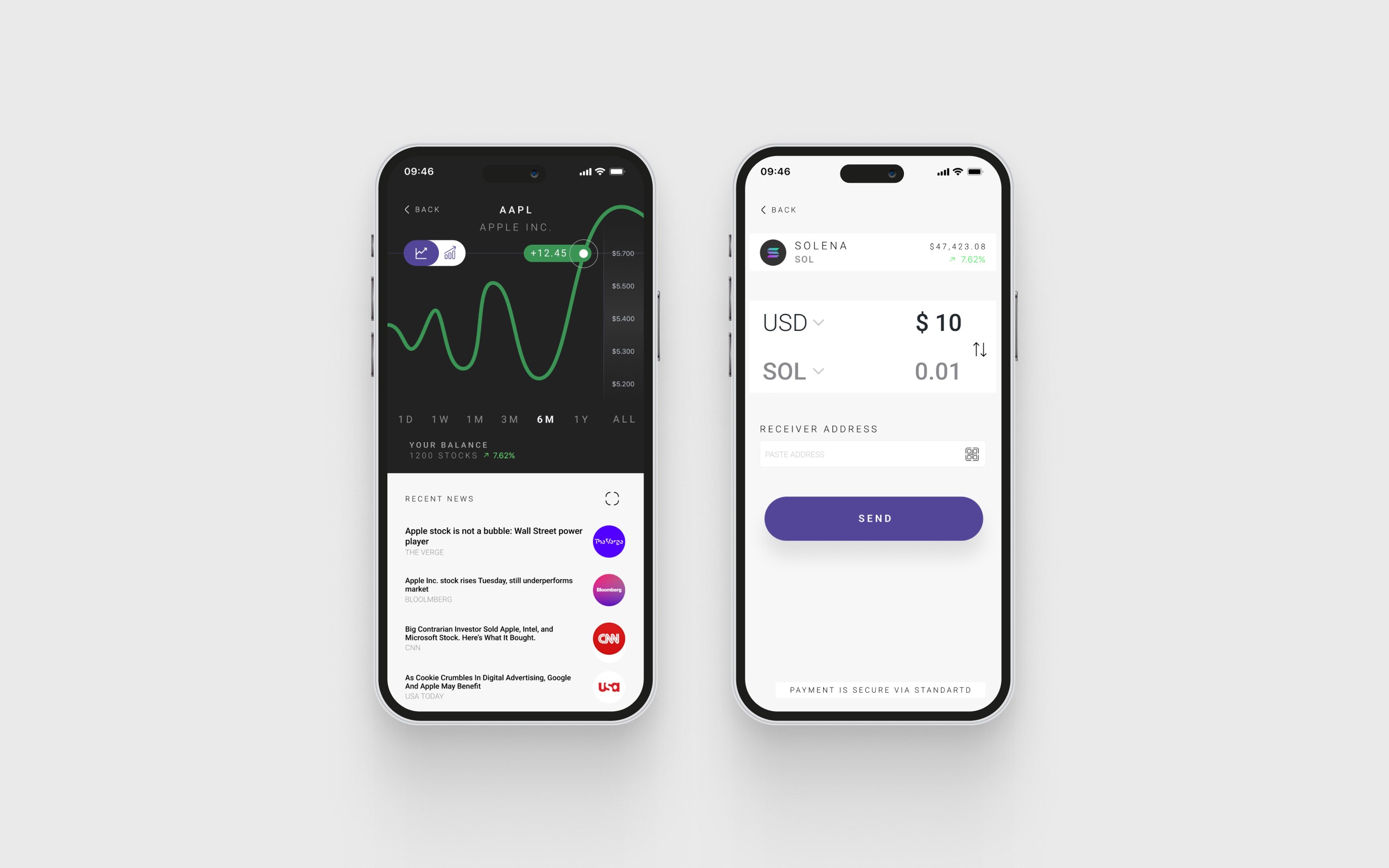
Dark mode was chosen for functional reasons: trading happens in low-light environments across extended sessions, and dark backgrounds improve signal-to-noise for data visualizations. The color system was stripped to neutral grays, a single action accent, and a restrained use of green and red — only when it carries meaning, which makes those moments land harder.
Information hierarchy was rebuilt from what a trader actually needs to know first, second, and third — not from what data was available to display. Onboarding introduces functionality progressively, so the interface never shows more than the user is ready for.
IMPACT — Fast for beginners, deep for experts
Testing with both new and experienced traders pointed the same direction: faster onboarding for newcomers, genuine analytical depth for experienced users. The standout feedback: the platform felt like it was working with you, not demanding something from you.
Tools: Figma · Prototyping · Data Visualization · UX Research · Interaction Design



Next